


E-shop of the
tillage equipment
E-shop of the
tillage equipment
The GULDEN deep cultivator is a smart alternative to conventional soil preparation technology that prepares the soil for sowing in one pass.
The technological combination of several operations significantly saves resources. For example, the implements can be effectively used during all periods of field work (for loosening or slotting), which significantly reduces the cost of replenishing the machine fleet.
GULDEN subsoilers are robust machines with a working width of 4 metres.
After processing with a GULDEN subsoiler, the soil is broken down:
More about GULDEN from the chief designer Alexey Grinenko
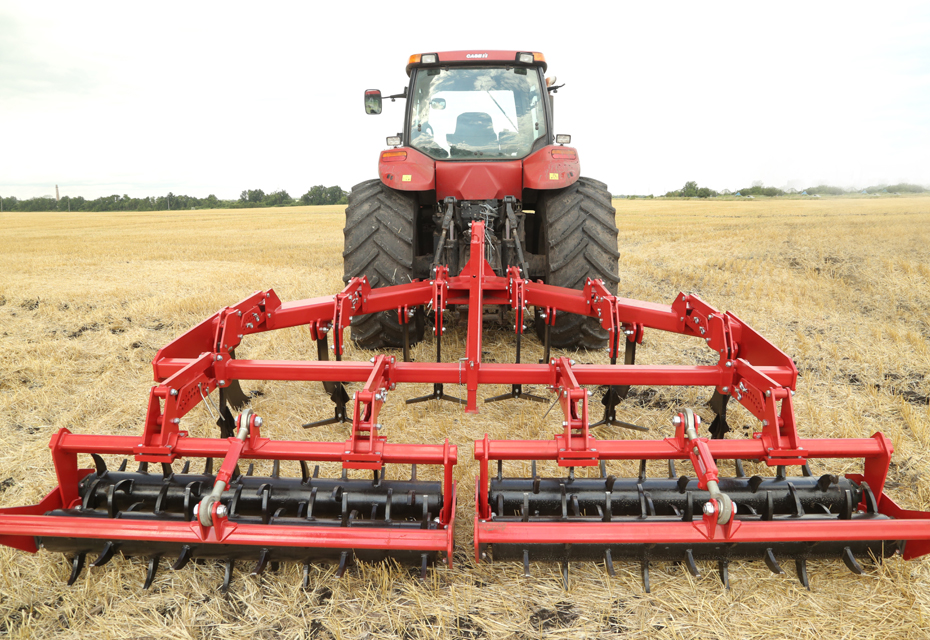
The delta-shaped frame of the implement is made of a profile tube in the form of an isosceles triangle, which redistributes forces and reduces the load on the frame
.jpg)
The first row is for deep tillage up to a depth of 45 cm. The second, additional row is for intensive mulching of the top layer to a depth of 25 cm.
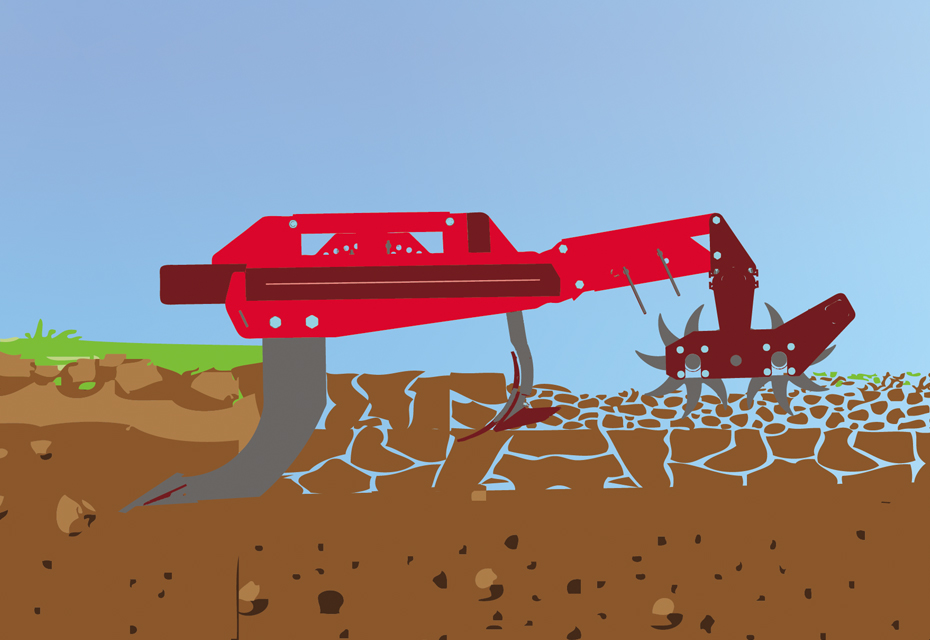
The tine used on deep rippers enters the soil at a right angle, undermining the plough sole, crumbling it with additional wings, and crushing the root system of weeds.
Requires less traction force (than a paraplane-type rack). It is used for loosening not only the lower layers, but also the upper layer when it is necessary to minimally cultivate the soil.
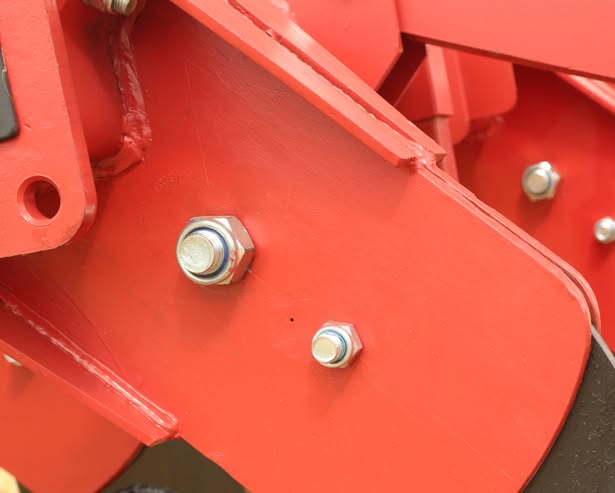
A shear screw is used to protect against overloads that exceed the maximum permissible loads.
A distinctive feature of LOZOVA MACHINERY equipment is the “ZERO MAINTENANCE” principle, which means that the equipment does not require lubrication/re-lubrication and other standard maintenance throughout its entire life cycle.
The units do not require maintenance (they do not have any lubrication points at all), which is very convenient for small farms.
Nothing is lubricated, nothing is adjusted, nothing is tightened. By purchasing such a machine, the farmer significantly increases the efficiency of tillage, while significantly reducing costs.
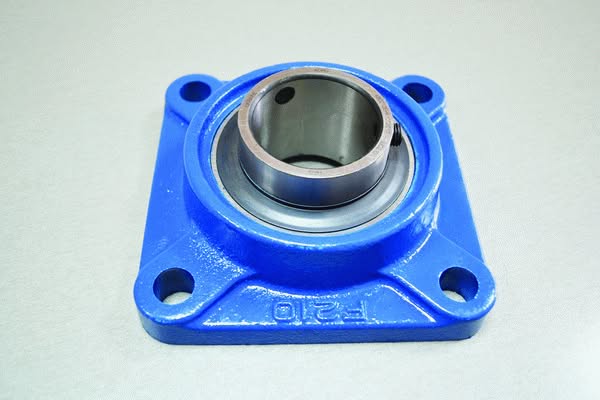
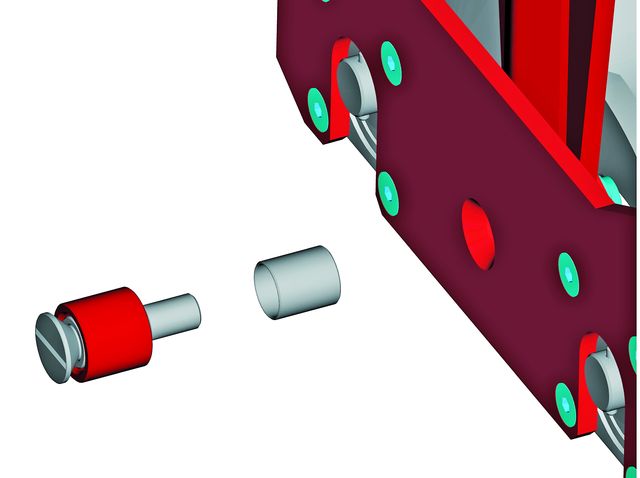
Premium quality bearing unit
The deep cultivators are equipped with the most reliable maintenance-free HARP AGRO UNIT bearing units, and the use of high-quality German plain bearings eliminates wear of the rotation units of the roller adjustment mechanism.
Reliable plain bearings
The bimetallic plain bearings installed in the roller balancer and the axle of the depth adjustment mechanism ensure reliable operation of these components for a long period of time.
This eliminates the possibility of ‘breaking’ of the pumping points with the product losing its functions. In fact, there is not a single lubrication point in the entire implement.
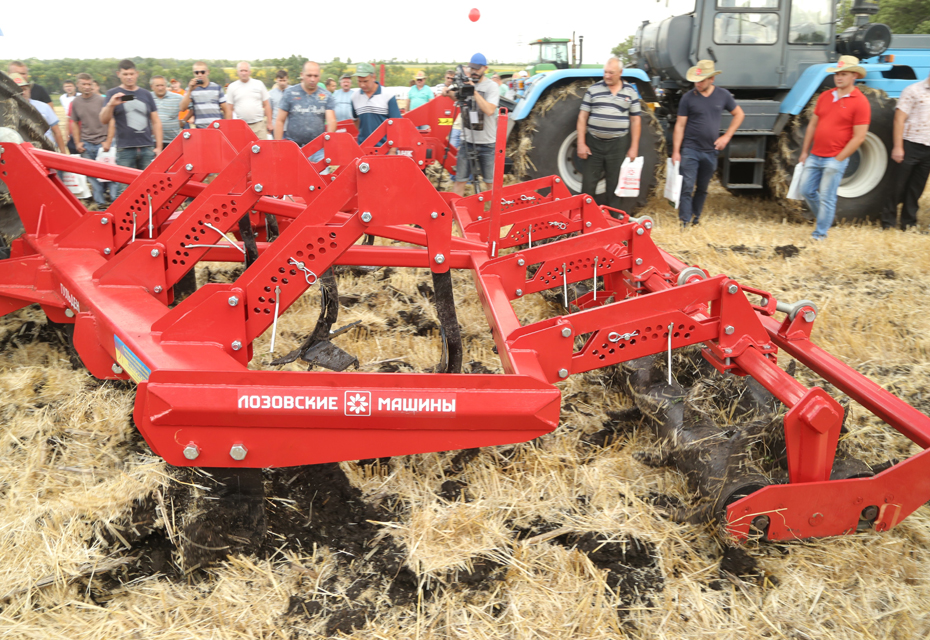
The front and rear row depth adjustment is independent of each other. It is carried out with the fingers on the roller mounting parallelogram for the front tines and on the parallelogram for the rear tine row.
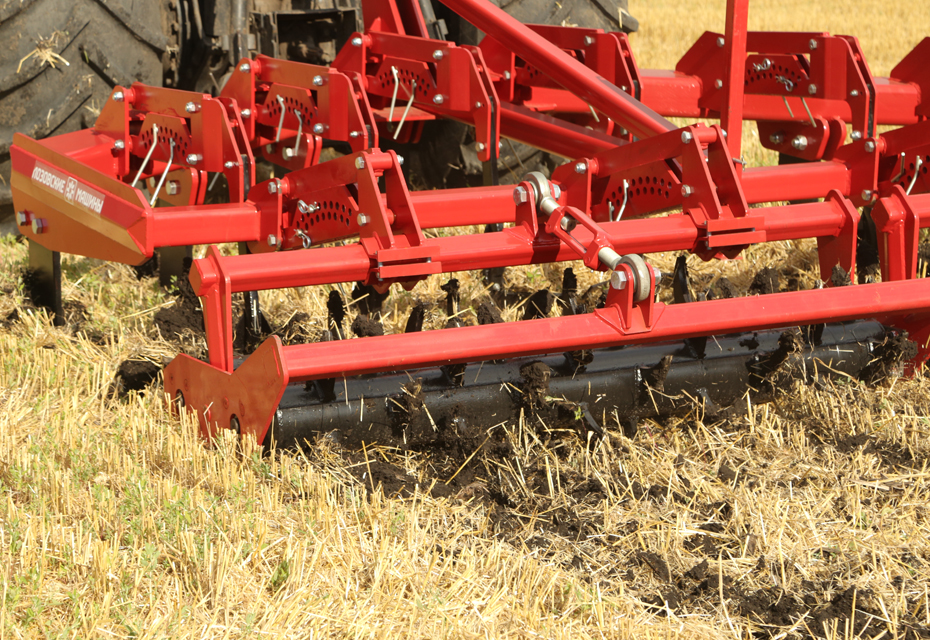
Depending on the desired cultivation objectives, the rollers can be set to work evenly or to emphasise the front or rear roller. All you need to do is adjust the roller pull.
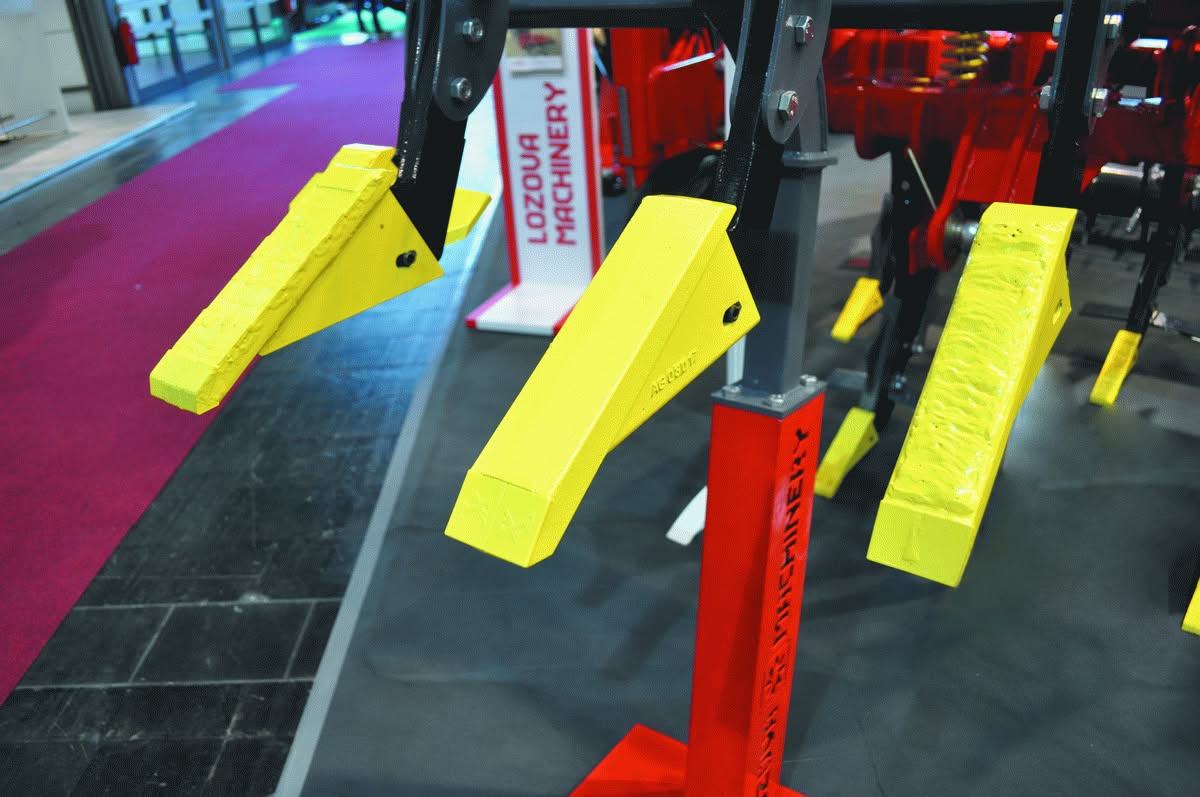
The HARD-SHELL Quick Change Handpiece has the longest service life. The use of HARD-SHELL significantly reduces operating costs
costs, ensures the highest quality of work and a stable working depth.
- The hardness is over 88 HRC.
The GULDEN quick-change tips made of boron steel with integrated wings for harrows loosen the soil well, even between the working posts. At high working speeds, the use of the side wings creates a ‘wave blasting’ effect.
- The hardness is more than 88 HRC.
WORKS THREE TIMES LONGER!
The balancing arrangement of the twin spur roller ensures that both rollers are in constant contact with the ground.
The central screw allows for reliable adjustment of the roller in relation to the longitudinal plane.
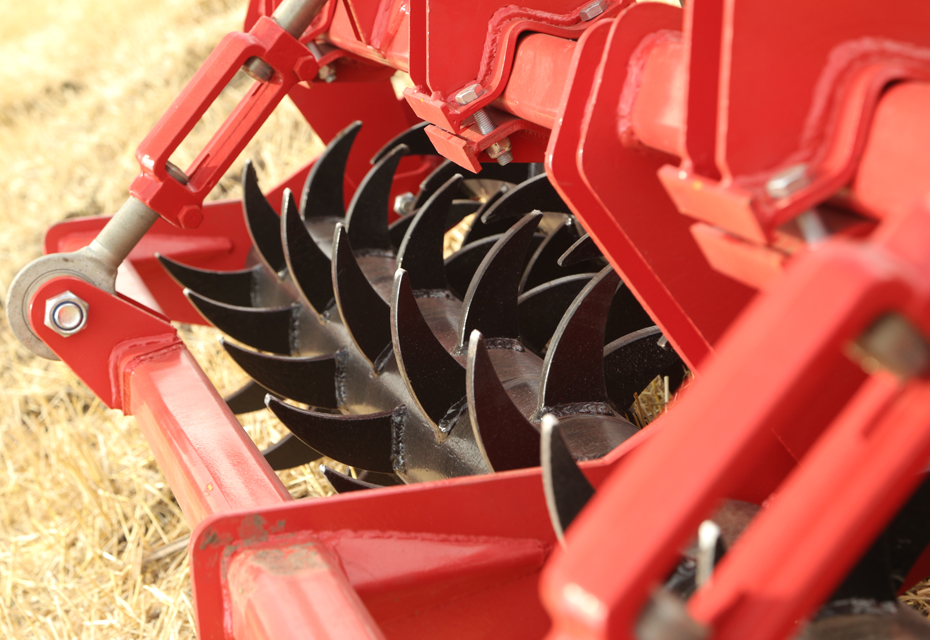
For additional crumbling of the topsoil and levelling of the field surface, even distribution of plant residues, the tool is equipped with twin spur rollers.
The spurs break up large clods that are thrown to the surface, prepare and level the soil, simplifying further final pre-sowing tillage.
The rotating spurs sink the plant residues into the lower soil layers and mix them with the soil in the 15-20 cm thick surface layer.
.jpg)
When working in conditions with a large amount of crop residue, the rear row of tines can be raised and removed from the work. This allows the front tines to work deeply into the soil, breaking up compacted areas without the risk of clogging the implement. The same implement can therefore be used as a two-level subsoiler and a slotter, depending on the depth setting on the additional rear row of tines.